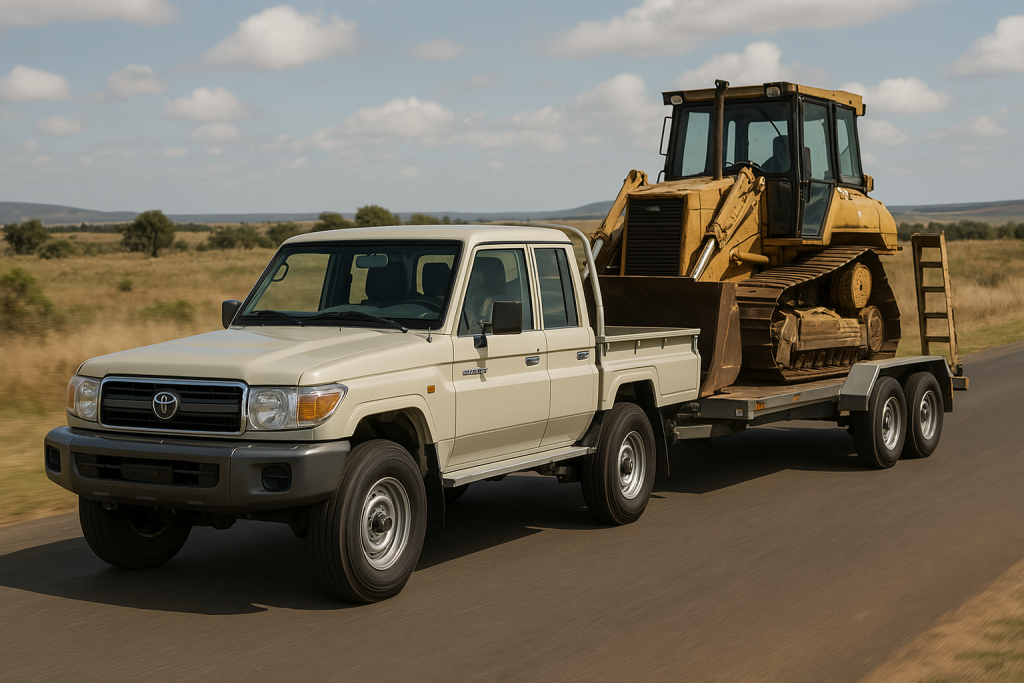
When it comes to towing heavy loads, engine choice makes a significant difference in performance, fuel economy, and overall driving experience. Two popular options for towing vehicles are the robust V8 and the increasingly capable 2.8L 4-cylinder turbo-diesel engines. But which configuration truly delivers the best towing experience? Let’s dive into a comprehensive comparison to help you make an informed decision for your towing needs.
Engine Specifications Compared
Before analyzing towing capabilities, let’s establish the baseline specifications of typical V8 and 2.8L 4-cylinder engines found in popular towing vehicles:
| Specification | Typical V8 (4.5-5.7L) | Typical 2.8L 4-Cylinder Turbo-Diesel |
|---|---|---|
| Displacement | 4.5-5.7L | 2.8L |
| Configuration | V8 | Inline-4 |
| Power | 200-280 kW | 130-150 kW |
| Torque | 430-650 Nm | 420-500 Nm |
| Peak Torque RPM | 1,600-3,600 RPM | 1,400-2,500 RPM |
| Weight | 250-320 kg | 180-220 kg |
| Fuel Type | Diesel/Petrol | Diesel |
V8 Towing Performance
The V8 engine has long been the gold standard for serious towing, particularly in vehicles like the Toyota LandCruiser 79 Series, Nissan Patrol, and various American pickups.
Strengths of V8 Engines for Towing
1. Superior Sustained Power Delivery
V8 engines excel at maintaining consistent power output under prolonged load. This characteristic becomes particularly evident when:
- Climbing long, steep grades
- Towing at highway speeds for extended periods
- Operating in high-temperature environments
A Queensland-based owner of both engine types explains: “With my V8 LandCruiser, I can pull my 3-tonne caravan up the Toowoomba range without dropping below 80 km/h. The same climb with my previous 2.8L required downshifting and significantly reduced speed.”
2. Enhanced Thermal Management
V8 engines typically feature:
- Larger cooling systems
- Better heat dissipation properties
- More stable operating temperatures under load
This translates to fewer concerns about overheating when towing in challenging conditions, particularly important in Australia’s harsh climate.
3. Engine Braking Capability
The additional engine displacement of V8s provides superior engine braking when descending hills with heavy loads. This reduces wear on brake components and enhances safety during downhill towing.
Limitations of V8 Engines
Despite their towing prowess, V8 engines come with notable drawbacks:
1. Fuel Consumption
V8 engines typically consume 25-40% more fuel than comparable 4-cylinder alternatives when towing similar loads. Expect consumption figures of:
- 16-22L/100km when towing 2,500kg+ trailers
- 12-16L/100km during unladen highway driving
2. Initial and Ongoing Costs
V8-powered vehicles generally command:
- Higher purchase prices ($10,000-25,000 premium)
- More expensive maintenance (more parts, oil, etc.)
- Higher registration fees in some jurisdictions with engine-size-based fee structures
2.8L 4-Cylinder Towing Performance
Modern 2.8L 4-cylinder turbo-diesel engines have evolved significantly, challenging the traditional dominance of V8s in the towing space. These engines power vehicles like the Toyota HiLux, Ford Ranger, and Isuzu D-Max.
Strengths of 2.8L 4-Cylinder Engines
1. Impressive Torque Characteristics
Modern 2.8L turbo-diesel engines deliver:
- Peak torque at very low RPM (often from 1,400 RPM)
- Flat torque curves ideal for maintaining momentum
- Nearly comparable maximum torque figures to some V8s
2. Fuel Efficiency While Towing
The efficiency advantage is substantial:
- 12-16L/100km when towing 2,000-2,500kg loads
- 8-10L/100km during unladen highway driving
- Potential for 30-40% greater towing range on a single tank
3. Weight and Balance Benefits
The lighter weight of 4-cylinder engines (typically 60-100kg less than comparable V8s) delivers:
- Better weight distribution (less mass over the front axle)
- Increased available payload capacity
- Often more nimble handling when not towing
Limitations of 2.8L 4-Cylinder Engines
Despite impressive advancements, 4-cylinder engines still face challenges when towing:
1. Heat Management Under Sustained Load
Four-cylinder engines tend to:
- Build heat more quickly under heavy load
- Require more aggressive cooling fan operation
- Potentially require transmission temperature management upgrades
2. Power Delivery at Higher Speeds
When towing at highway speeds (especially over 90km/h), 4-cylinder engines:
- May struggle to maintain speed on inclines
- Often operate at higher RPM to maintain power
- Can experience more pronounced turbo lag when accelerating
3. Durability Concerns Under Maximum Loads
When consistently towing at or near maximum capacity:
- Components experience greater relative stress
- Turbocharger systems face increased thermal loads
- Service intervals may need to be shortened
Real-World Towing Scenarios: V8 vs 2.8L 4-Cylinder
To better understand how these differences play out in practical applications, let’s examine several common towing scenarios:
Scenario 1: Towing a 2,500kg Caravan on Highway
V8 Performance:
- Maintains highway speeds effortlessly, even on inclines
- Operates comfortably within its capacity
- Fuel consumption increases by approximately 40-50%
- Stable and confident towing feel
2.8L 4-Cylinder Performance:
- Maintains highway speeds on flat terrain and moderate hills
- May require downshifting on steeper inclines
- Fuel consumption increases by approximately 50-60%
- Generally stable but may feel more affected by crosswinds
Scenario 2: Off-Road Towing with 1,500kg Trailer
V8 Performance:
- Excellent low-speed torque for technical terrain
- Superior control when negotiating obstacles while towing
- Effective engine braking on descents
- Greater cooling capacity for low-speed off-road work
2.8L 4-Cylinder Performance:
- Good low-end torque suitable for most off-road conditions
- Lighter front end can be advantageous in some terrain
- Adequate engine braking but may rely more on mechanical brakes
- May require more careful management of fluid temperatures
Scenario 3: Regular Towing of Varying Loads (500-2,000kg)
V8 Performance:
- “Overkill” for lighter loads, resulting in poorer efficiency
- Consistent performance regardless of load variation
- Higher operating costs even when towing is occasional
2.8L 4-Cylinder Performance:
- More economical for mixed-use scenarios
- Perfectly adequate for most loads under 2,000kg
- Better balance of capability and efficiency for occasional towers
Cost Comparison Over 5 Years
For many buyers, the long-term economics play a crucial role in the decision. Let’s analyze the approximate 5-year cost difference between comparable V8 and 2.8L 4-cylinder vehicles used regularly for towing:
| Cost Factor | V8 Vehicle | 2.8L 4-Cylinder Vehicle |
|---|---|---|
| Initial Price Premium | +$15,000 | Baseline |
| Fuel Cost (60,000km, 30% towing) | $12,000-15,000 | $7,500-10,000 |
| Maintenance (5 years) | $5,000-7,000 | $4,000-5,500 |
| Registration/Insurance Premium | +$2,000-3,000 | Baseline |
| Resale Value Retention | Better (typically) | Variable |
| Total Cost Difference | +$20,000-25,000 | Baseline |
This analysis suggests that over a 5-year period, a V8 vehicle will typically cost $20,000-25,000 more to own and operate than a comparable 2.8L 4-cylinder alternative.
Making the Right Choice: Which Engine is Best for Your Towing Needs?
The optimal engine choice depends significantly on your specific towing requirements and usage patterns:
Choose a V8 If:
- You regularly tow loads exceeding 2,500kg
- Your towing often involves challenging conditions (steep terrain, extreme temperatures)
- You prioritize towing performance and capability over economy
- You frequently drive in remote areas where reliability under load is critical
- Your towing needs are constant rather than occasional
Choose a 2.8L 4-Cylinder If:
- Your towing needs rarely exceed 2,500kg
- You use your vehicle for daily driving when not towing
- Fuel economy and lower operating costs are important considerations
- Your towing is primarily on-road in moderate conditions
- You tow occasionally rather than constantly
Technological Advancements Narrowing the Gap
Recent technological developments continue to narrow the performance gap between these engine configurations:
- Advanced turbocharging systems in 4-cylinder engines deliver increasingly V8-like torque curves
- Sophisticated transmission mapping optimizes power delivery for towing applications
- Electronic towing assists help compensate for engine differences
- Hybrid assistance technologies beginning to appear in towing vehicles
Industry expert David Morley observes: “Ten years ago, the difference between towing with a V8 and a good 4-cylinder was night and day. Today, for all but the most demanding applications, the gap has narrowed dramatically. For most recreational towers, a modern 2.8L turbo-diesel will handle their needs admirably.”
Conclusion: Matching Engine to Application
While the legendary V8 remains the premier choice for the most demanding towing applications, modern 2.8L 4-cylinder engines have evolved to handle a surprisingly wide range of towing duties with excellent efficiency and adequate performance.
For most recreational users who tow caravans, boats, or trailers weighing under 2,500kg, today’s advanced 4-cylinder engines represent a compelling option that balances capability with economy. Those regularly pushing the limits of towing capacity or operating in extreme conditions will still appreciate the additional headroom and thermal capacity that V8 engines provide.
Ultimately, an honest assessment of your actual towing requirements—rather than theoretical maximums—will lead to the most satisfying engine choice for your specific needs and budget.
What’s your experience towing with V8 versus 4-cylinder engines? Share your thoughts and experiences in the comments below!
Disclaimer: Always consult your vehicle’s specifications, towing capacity ratings, and local regulations before making towing decisions. This article provides general guidance and should not replace manufacturer recommendations.